
Why not exercise more? People need other people to sustain healthy living habits
6 October 2026
Health programmes must move towards practical skills, coaching and follow-up that help and encourage residents to sustain healthy behaviour in daily life.
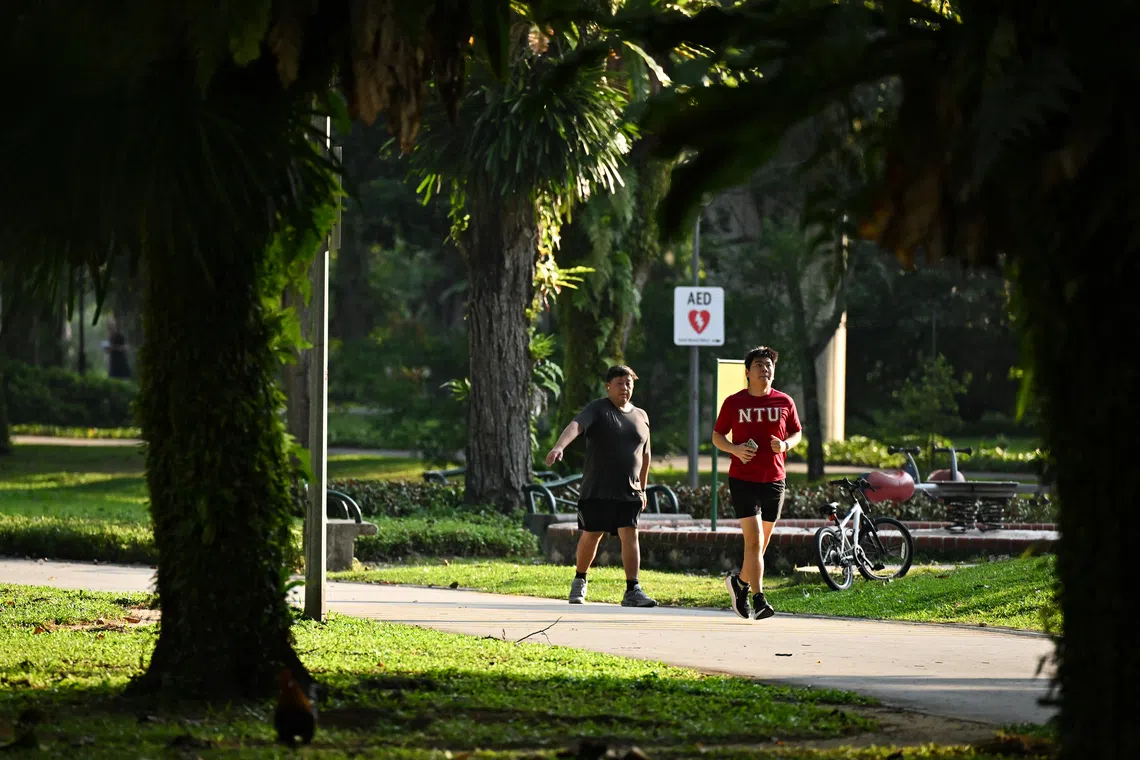
The social element to healthy living is not incidental, and the neighbourhood itself must also invite participation, say the writers. PHOTO: ST FILE
What would a healthy neighbourhood look like?
In Yio Chu Kang, an elderly resident, Lim, envisions it as a green park where her family can picnic, a place for a walk after a long day of work, and peaceful spaces to pause and clear her mind.
Much of public health messaging begins with a simple assumption: if people know what is good for them, they are more likely to do it. The Healthy Precinct Framework, conceptualised and designed by the MOH Office for Healthcare Transformation (MOHT) in partnership with agencies and community partners, takes this further and recognises that decisions are never made in isolation. Habits are shaped by whether healthy food is affordable, whether walking routes are comfortable, whether there are interesting programmes nearby, and whether someone notices when a neighbourhood friend stops showing up.