
A Day in the Life of a Quality Improvement Professional with MOHT’s National Improvement Unit
20 June 2026
A Day in the Life at MOHT series
One of MOHT’s strengths stems from having a pool of talents from diverse backgrounds, facilitating the cross-diffusion of learning and insights within the organisation and across the ecosystem.
“A Day in the Life at MOHT” is an MOHT blog series where featured colleagues relate how their individual talent, experience and practice has enriched MOHT’s tapestry of contributions towards the transformation of Singapore’s healthcare.
In this instalment, we take a look at a day in the life of a Quality Improvement Professional with MOHT’s National Improvement Unit, Jes Fergus.
Contributed by Jes Fergus
"Across my career, I have always been curious about how people learn most effectively, how teams work well together, and how we translate good ideas into meaningful outcomes and better practice."
That curiosity has taken me down a series of different and seemingly unrelated paths: from clinical training and public health administration to emergency services education, community development, and even creative work in the arts.
It was only later, through my work in Quality Improvement, that these threads began to converge. Quality Improvement, with its focus on outcomes, causality, and iterative learning, became the space where these diverse experiences finally connected in a way that made sense.
My name is Jes Fergus and I am a Senior Manager with the National Improvement Unit (NIU) at MOHT.
From clinical practice to training and education...
I am a trained medical doctor and spent 10 years of my early career in clinical practice, including rotations in Renal, Internal Medicine, and Haematology at the Singapore General Hospital (SGH).
After about five years as a Medical Officer at SGH, I stepped away from clinical practice and moved into public health administration. I spent time with the Health Promotion Board and later joined the Ministry of Health (MOH), where my portfolio included Emergency Care Services across both hospital and prehospital settings.
I then joined the Singapore Civil Defence Force (SCDF), where I was deeply involved in building educational programmes and professional development pathways for Emergency Medical Services personnel. It was a defining chapter which spanned a good decade of my career.
My experience at SCDF taught me that training only becomes meaningful when it translates into practice. A good programme must make sense to the people doing the work, fit realities on the ground, and be introduced at a pace that allows people to absorb new skills, try them safely, and build confidence.
...to improvement science
Joining NIU felt like a natural next step. Quality Improvement was relatively new to me, and it was what attracted me. I wanted to learn how change is designed, tested, refined, and spread across institutions through methods that teams can replicate and use consistently.
NIU’s mandate as a national-level platform looking into improvement science appeals tremendously to me. My early career, where I was involved in the development of the Unit for Pre-hospital Emergency Care, taught me that building capability is just as impactful as direct service delivery.
This belief was reinforced by the work I do in community development – a broad term I use to encompass initiatives beyond my usual office work, including arts-based engagement, training community development workers, and supporting activities such as children’s programmes and educational empowerment efforts. I see the parallels between transforming communities and transforming healthcare. Both rely on bringing people together, building shared purpose, testing ideas in real settings, learning from what happens, and improving steadily over time.
My role at NIU
If I had to summarise my job in one line, it would be this: I turn Quality Improvement ideas into sustained action by making change easier to implement, participate in, and scale.
My work at NIU is largely behind the scenes, where I support people, programmes and processes to embed Quality Improvement across the system. I contribute to capability-building efforts such as the Improvement Advisor Professional Programme, from preparing recruitment materials to coordinating with trainers to ensure a smooth learning experience for participants.
I also support learning platforms such as the Primary Care Network (PCN) Quality Improvement Programme, collaborative learning sessions, and journal clubs to help teams apply insights to real priorities.
A key part of my role is community building. Through platforms such as the Improvers Network Singapore and Community of Practice (INSpire) gatherings, we bring practitioners across institutions to cross-share improvement efforts. Forging practical solutions to our challenges makes transformation more accessible and tangible.
Lastly, I support the operational systems that enable this work, including the PDSA (Plan, Do, Study, Act) Support Funding Scheme, procurement, budgeting, communications, and web content. While less visible, these efforts reduce friction and enhance clarity, allowing teams to focus on improving care.
Today, my work focuses on building improvement capability across Singapore’s healthcare system. The role draws on my past experiences: the structure of capability building, the instincts of community work, and the creativity to design learning experiences that translate seamlessly into the real-world.
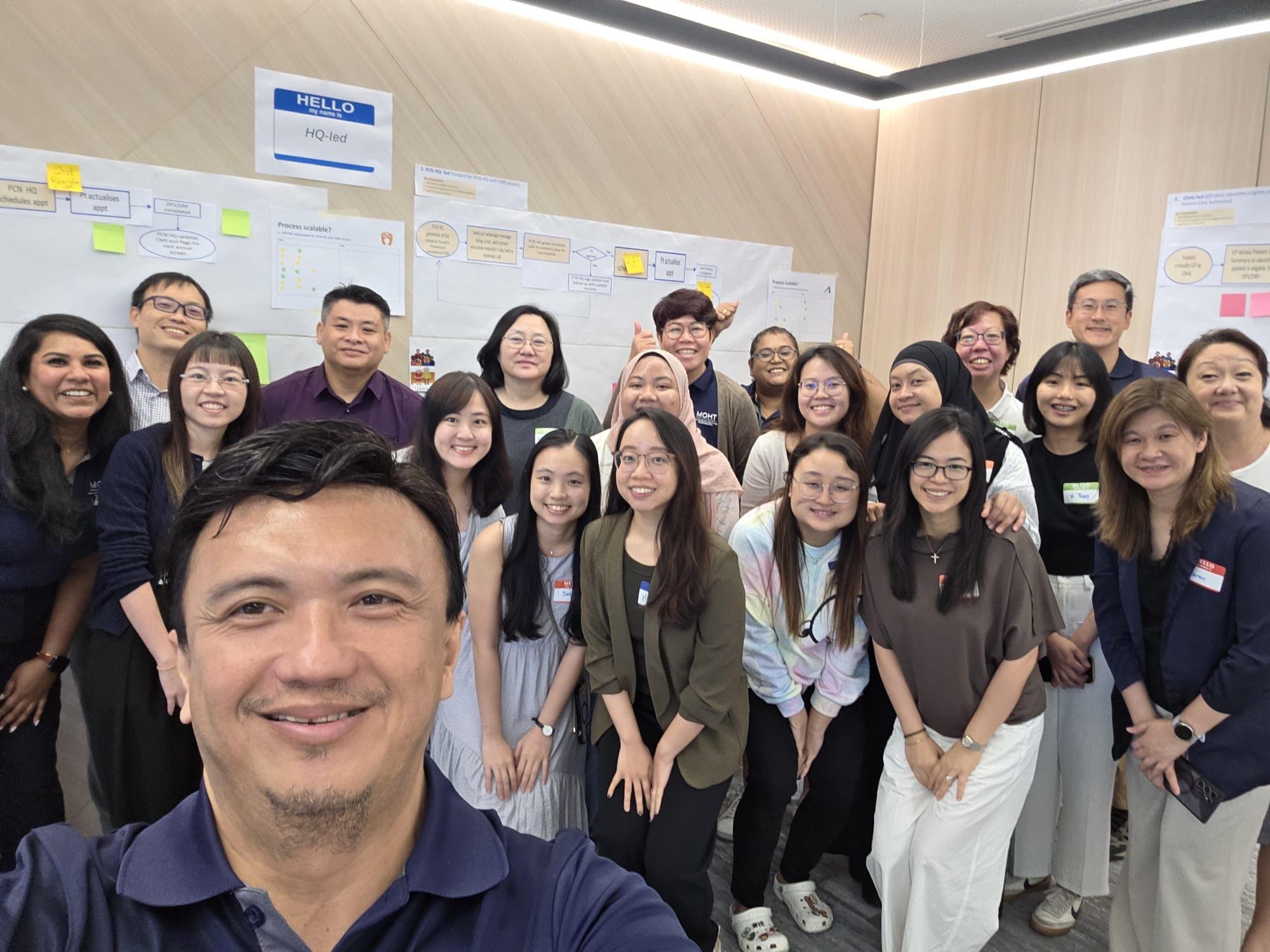
Coordinating a “wefie” at NIU’s PCN Design Workshop, which brought together colleagues from PCNs, MOH, and the Agency for Integrated Care to align on scalable processes supporting improvements in Healthier SG indicators.
How medicine still shapes my work
Even though I am no longer practising clinically, my medical training shows up in my work more often than people assume. Medicine trained me to notice what is important, ask good questions, and hold both detail and context at the same time. It taught me to consider trade-offs, anticipate risks, and stay grounded in what ultimately matters: the experience and outcomes of people receiving care.
In improvement work, I find myself returning to familiar instincts. What is the real problem we are trying to solve? What will this look like in practice? What might get in the way, and how can we design around it? How do we learn quickly without wasting effort? These questions help me stay anchored, especially when we are translating ideas into implementation across multiple sites and teams.
A memorable MOHT moment
My most memorable experience at MOHT did not happen during formal work. It was during our visit to Bukit Batok Care Home as part of MOHT’s CSR activity. We spent a meaningful afternoon engaging with residents of the nursing home during an excursion to Jewel Changi. Our simple conversations with the residents were a quiet reminder that transformation is not only about frameworks, programmes, and systems – it is also about connection, dignity, and paying attention to the everyday moments that matter to the people we serve.
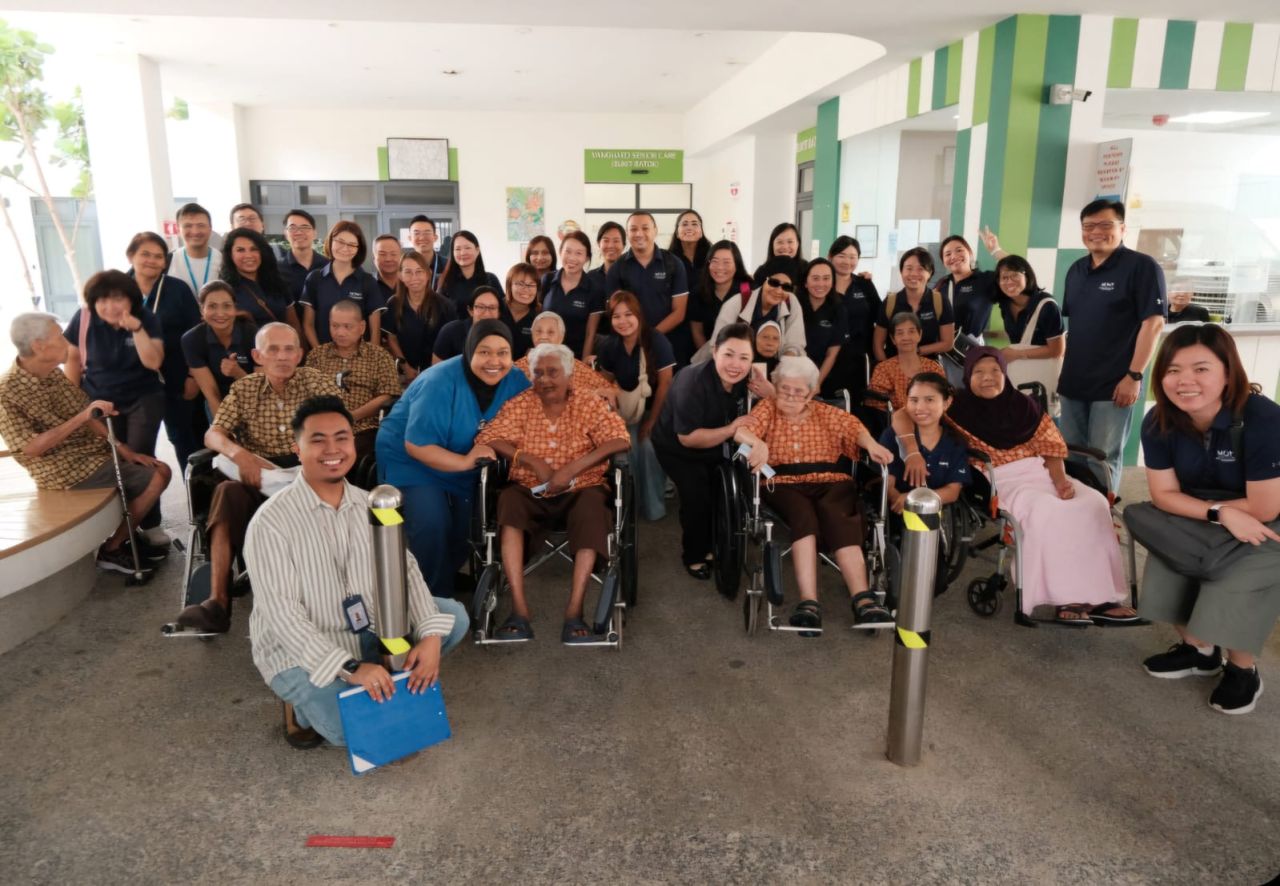
A meaningful day out with seniors from Bukit Batok Care Home. I’m first from the left in the back row, in a white T-shirt.
Beyond work: the arts, community, and the kampong spirit
Outside of MOHT, I have always been drawn to community building through the arts. Over the years, I have been involved in community-based arts in Singapore, Kazakhstan, and the Philippines, where I grew up. For me, the arts are a gentle but powerful way to promote health, strengthen belonging, and help people feel seen and connected.
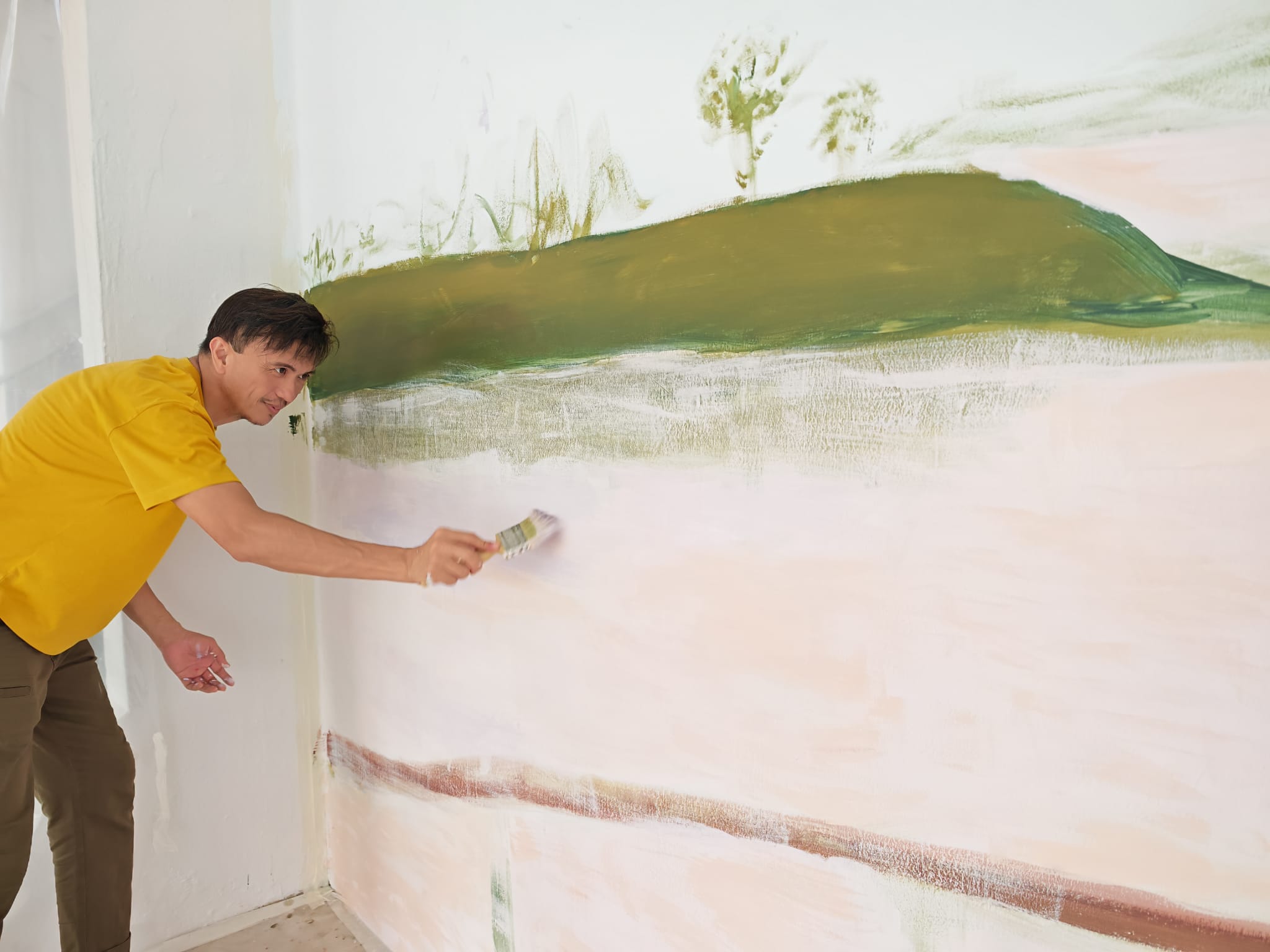
Engaging in a mural project for the Sree Narayana Mission Senior Care Centre @ Khatib, located at Blk 627 Yishun St 61.
One of the most meaningful parts of this journey has been Syncroony, a ground-up community singing movement that I co-founded. Syncroony is more than a space for collective singing; it’s a community platform that unites and uplifts, dedicated to building cohesion and collective wellbeing. I am proud to share that Syncroony has been recognised as a Ground-Up Movement by the Singapore Kindness Movement and BAGUS Together. It reminds me that community transformation often begins with something simple, done consistently, with heart.
In some ways, these passions mirror what I do at NIU: bringing people together, creating shared meaning, and building the conditions for collective growth.
My hope for the future
Looking ahead, I hope to continue growing in how I lead, delegate, and help teams in my workplace and community. When more teams feel supported to test, learn, and scale what works, transformation becomes not just possible, but sustained.
For me, NIU brings together the different strands of my journey. It is where clinical training, capability building, community work, and creativity all find a common purpose: helping people and teams improve care in ways that last.