
Rethinking Youth Mental Health - Together
15 October 2025
Contributed by Hazirah Hoosainsah
As a clinician working on digital mental health platforms like mindline.sg and let’s talk – co-created with young people, for young people to provide accessible and anonymous support – I’ve seen how transformative it is when young people are genuinely centred in mental health innovation. So, when I attended the International Association for Youth Mental Health Conference (IAYMH25) in Vancouver in March, the conversations around reimagining youth engagement in mental health research felt deeply personal and energising. Seeing researchers, clinicians, and young advocates from around the world come together with this shared mission reminded me of why this work matters so profoundly.
One standout session explored how youth engagement has evolved across various cultural and regional contexts. Research teams from multiple countries shared lessons from their landscape analysis on youth mental health. Although contexts varied, the message was clear: meaningful youth engagement requires deliberate effort and a mindset shift – moving from viewing young people as subjects of research to recognising them as partners and co-creators. This means transitioning from asking “What can we do for young people?” to asking “What can we do with young people?”.
This collaborative approach underpinned many of the sessions I attended. Here are some of my key takeaways from the Conference:
1. Diversity in Recruitment Matters
A recurring theme was the importance of recruiting a broad and diverse range of youth - not just those already involved in mental health spaces. Reaching young people who might not see themselves in these conversations is essential if research is to reflect real experiences.
To do this, some teams used social media to connect with underrepresented groups. Others partnered with local organisations that already had credibility with youth in the community. Some even offered basic mental health training, such as psychological first aid, to help youth feel more prepared and confident about their involvement.
These approaches aimed to create genuine opportunities for young people to take part meaningfully, rather than focusing only on how many could be reached.
2. Respect Builds Empowerment
It’s one thing to bring youth into a research project or initiative; it’s another to make them feel safe, respected and valued throughout.
Several panelists emphasised the need to establish clear expectations and co-create safe spaces where young people could speak openly. This included being transparent about roles, using icebreakers to build rapport, and making space for informal conversation before diving into data.
What resonated most was the view that youth are not just participants - they are valuable sources of knowledge. When young people feel that their contributions are truly respected, they are more likely to engage more meaningfully, yielding rich information that’s valuable for researchers.
3. Context Shapes Comfort and Participation
Another key learning was the critical role that cultural norms play in shaping how youth engage. In some settings, young people may hesitate to speak up in front of adults or authority figures while others may fear stigma or misunderstanding surrounding mental health.
Rather than viewing these as limitations, the teams adapted their methods accordingly. In some cases, they grouped participants by age to help youth feel more comfortable sharing among peers. In others, they took time to involve parents and explain the research, which helped to build trust and reduce stigma at home.
These examples demonstrate that culturally sensitive engagement – meeting youth where they are, rather than where we expect them to be – can foster deeper trust, more authentic participation, and ultimately, more meaningful insights.
4. Youth Engagement Creates Long-Term Impact
There were interesting stories of inspiration and courage too. Some young people who started out quiet or hesitant found their voices through the process and went on to pursue advocacy, further study, or new leadership roles. These weren’t isolated stories. They reflected the power of believing in young people and creating space for them to contribute meaningfully. Engagement, when done right, doesn’t just improve research - it can transform lives.
5. Shared Learning Helps Us Grow
In one symposium, speakers highlighted various ways in which they integrated lived experience into mental health research - ranging from depression studies involving youth not in employment, education, or training (NEET), to a global evidence synthesis programme, and even psychosis research that included animal models. The diversity of these approaches reminded me that there isn’t one “correct” way to engage youth, but there are many ways to do it meaningfully.
I greatly appreciated the honesty with which teams shared not just their successes but also their challenges. From difficulties in sustaining engagement to adapting tools for different communities, their transparency was a humbling reminder for all of us to keep learning and improving.
This spirit of shared learning is exactly what the field needs: the courage to ask hard questions, the humility to admit when something isn’t working, and the openness to keep evolving.
6. Technology Can Propel Us Further
Personally, one of the highlights of the conference for me was being given a chance to present on our local digital mental health solutions, youth mindline and let’s talk. Youth mindline is a free and anonymous platform designed to support young people’s mental wellbeing through self-help tools, resources, and digital therapeutics. let’s talk is an anonymous community forum that offers a safe, moderated online space for young people to share experiences, seek advice and connect with peers and professionals. Together, these platforms offer low-barrier support for young people by blending professional advice with peer-led community engagement. I had the privilege of co-presenting about our digital solutions with my colleague Dr Tricia Tan, who founded and led mindline.sg's first youth advisory group.
It was incredibly encouraging to see our initiatives receive international interest. Delegates were especially intrigued by how we’ve used technology to bridge gaps in access and engagement. Many were curious about the facilitative role artificial intelligence can play, particularly in improving response times and scaling personalised support in a safe and ethical way.
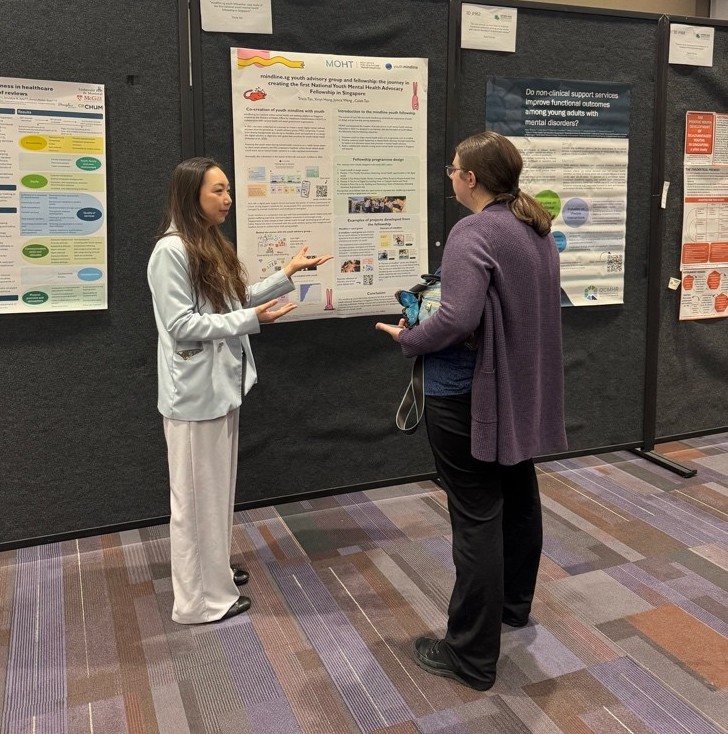
Dr Tricia Tan, who founded and led mindline.sg’s first youth advisory group, presenting our poster to a delegate.
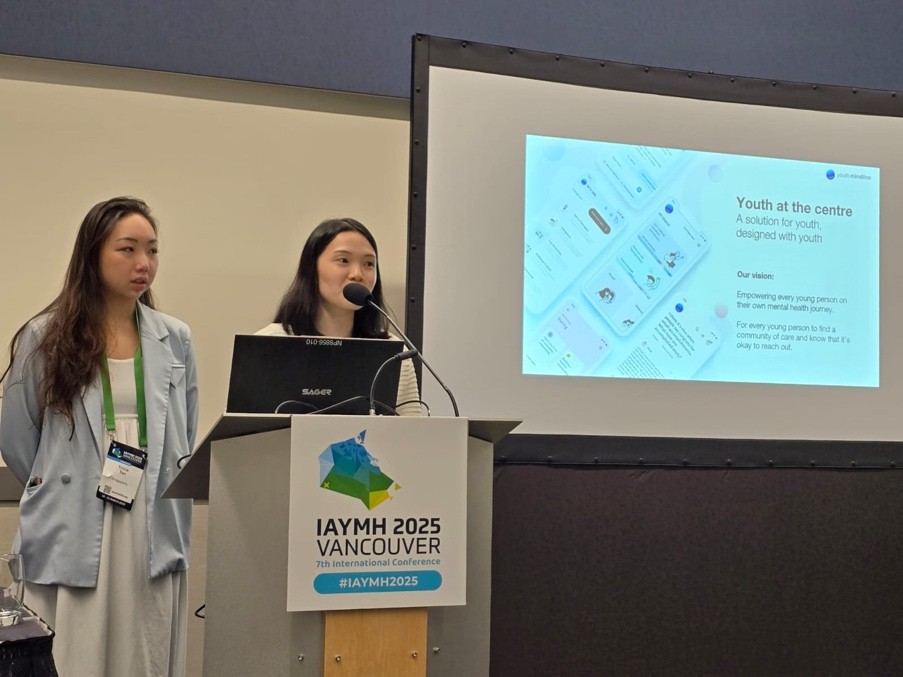
Dr Tricia (left) and I speaking to a room of delegates about our digital mental health solutions, youth mindline and let’s talk.
While systems differ globally, the shared aspiration is clear: thoughtfully applied technology can be a powerful enabler of mental health.
Final Reflections
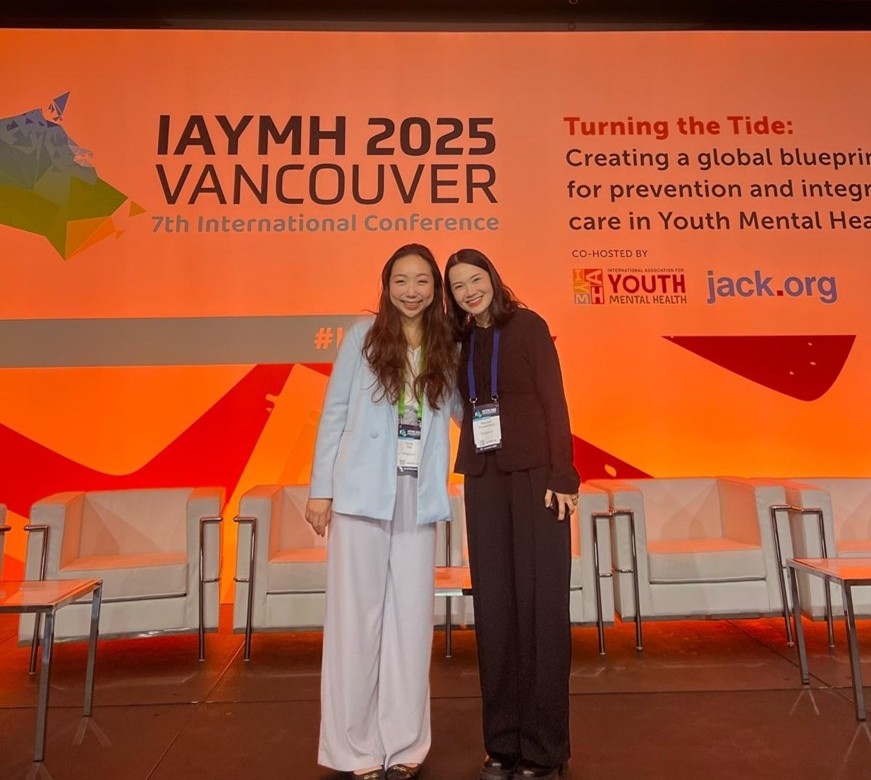
Dr Tricia and I on the final day of the Conference, wrapping up a meaningful four days of learning and getting inspired.
As I reflect on my experience at the Conference, one phrase comes to mind: “Nothing about us without us.” If we’re serious about improving mental health systems for young people, we must place their voices at the centre. Not as an afterthought, but as a guiding force.
That kind of engagement doesn’t happen by chance. It takes thoughtful design and a genuine belief in the insight young people can offer. It also takes courage - to unlearn, to let go of control, and to truly listen.
In Singapore, we’ve made progress, but there’s still more to be done. If we want to build systems that are relevant, compassionate, and lasting, we must keep making room for young people to lead, shape, and challenge the way forward. Their voices don’t just enrich the conversation, they are essential to real change.
Personally, this experience was a powerful reminder to hold myself accountable to those principles in my own work. Involving youth in a genuine manner has always been an intentional part of how our team operates, but this conference reinforced just how vital it is to continue doing so with purpose and rigour. What struck me most was the critical need to reach underserved youth – those outside the usual mental health circles who may otherwise be overlooked. Moving forward, this is something I want to pursue more intentionally, ensuring that no one gets left behind.
Hazirah is part of the clinical team behind let's talk and mindline.sg, where she combines her training in Clinical Psychology with digital innovation to create safe, accessible, and engaging mental health solutions for the population.