
A day in the life of a Senior Data Scientist at MOHT
3 February 2026
A Day in the Life at MOHT series
One of MOHT’s strengths stems from having a pool of talents from diverse backgrounds, facilitating the cross-diffusion of learning and insights within the organisation and across the ecosystem.
“A Day in the Life at MOHT” is a new MOHT blog series where featured colleagues relate how their individual talent, experience and practice has enriched MOHT’s tapestry of contributions towards the transformation of Singapore’s healthcare.
In the ninth edition, we look at a day in the life of Senior Data Scientist, Dr Connie Kou, from the Data, Science and Technology (DST) team at MOHT.
Contributed by Dr Connie Kou
I often joke that I’m the wrong kind of “doctor” – the kind who doesn’t save lives. After earning a Doctor of Philosophy (PhD) degree in Computer Science, I began my career as a data scientist at a big tech company. It was a doctorate, yes, but it wasn’t in medicine. Two years into my transition to healthcare, I hope I am starting to prove myself wrong.
My early career hinged on building strong technical foundations, but over time I wanted my work to feel more directly connected to people’s lives. So, when the opportunity came to join MOHT’s Data, Science and Technology (DST) team, I took a leap of faith – trading big-tech perks for a mission that truly matters.
I joined MOHT at an exciting time. Digitalisation has rapidly improved both the quantity and quality of healthcare data, and breakthrough Artificial Intelligence (AI) models like ChatGPT are opening up new possibilities for real world applications. We ask ourselves: How can data and AI help doctors and patients improve outcomes and manage the growing burden of chronic diseases?
To ground that question in reality, we spent time with general practitioners (GPs) through clinic visits and focus group discussions. We learnt that many GPs urgently need better clinical decision support systems (CDSS) – tools that connect data from disparate sources, generate actionable insights based on clinical guidelines, and deliver personalised recommendations to patients. At the same time, the doctors reminded us that not all challenges are technical. Many issues are deeply human – patients often struggle to adhere to treatment plans and lifestyle changes due to social and personal factors. This reinforced our belief that technology must complement, not replace, the human touch in healthcare.
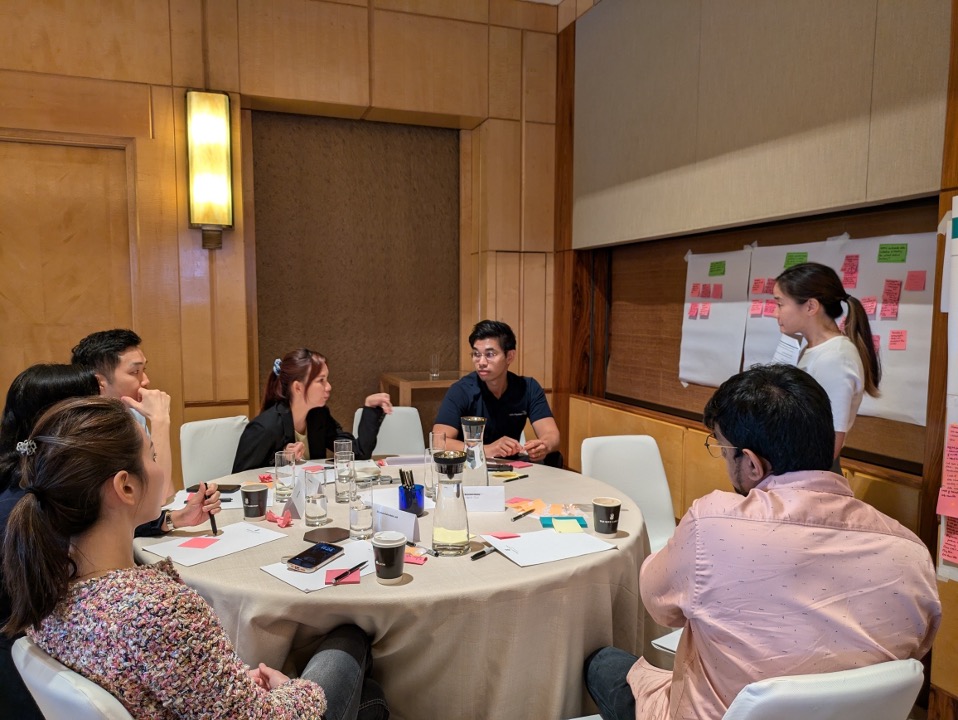
My colleague Shalabh (second from right) and I (far right) facilitating discussions with GPs on their pain points and ideas for improving clinical decision support.
With a small team and big dreams, we launched GRAECE: Guided Recommendations for AI-Enabled Clinical Excellence. The early days felt like a true start-up experience. While we searched for a product lead, I stepped up to lead the project – juggling roles as project manager, product manager, and business analyst. Unlike my previous job where problems were well-defined, here I had the chance to prioritise which problems to solve and co-create solutions with end users.
Once our product lead joined, I focused on the data and AI aspects. AI is generating tremendous excitement for its potential to transform industries, including healthcare. As a PhD graduate in AI, I am still amazed that methods once confined to research labs are now mainstream. However, my conversations with GPs taught me an important lesson: AI should never be a hammer looking for nails.
That’s why our approach brings together a multidisciplinary team of AI and clinical experts to design features that fit seamlessly into doctors’ workflows. Early feedback is critical, so I built quick prototypes, gathered input from clinicians, and worked with the team to refine and scale. I especially enjoy the ideation phase: brainstorming problems, exploring solutions, and applying the latest AI methods. While I’m passionate about AI, I find it equally satisfying when simple, non-AI solutions work. Because this isn’t just about technical efficiency – clinicians need to understand and trust the tools they use.
Continuous learning is essential. AI evolves rapidly, so I started a fortnightly reading group in DST to facilitate our learnings and discussions. Recently, I had the privilege of attending the WONCA World Conference 2025, organised by the World Organization of Family Doctors in Lisbon, Portugal. It was an eye-opening experience where I learnt how countries around the world are tackling rising healthcare costs and implementing initiatives in preventive care, lifestyle medicine, and mental health. One standout moment was a packed workshop on clinical guidelines – so popular that some participants had to sit on the floor! The conference was a fantastic opportunity to exchange ideas with family doctors from across the globe and explore ways to make clinical guidelines more actionable and relevant in everyday practice.
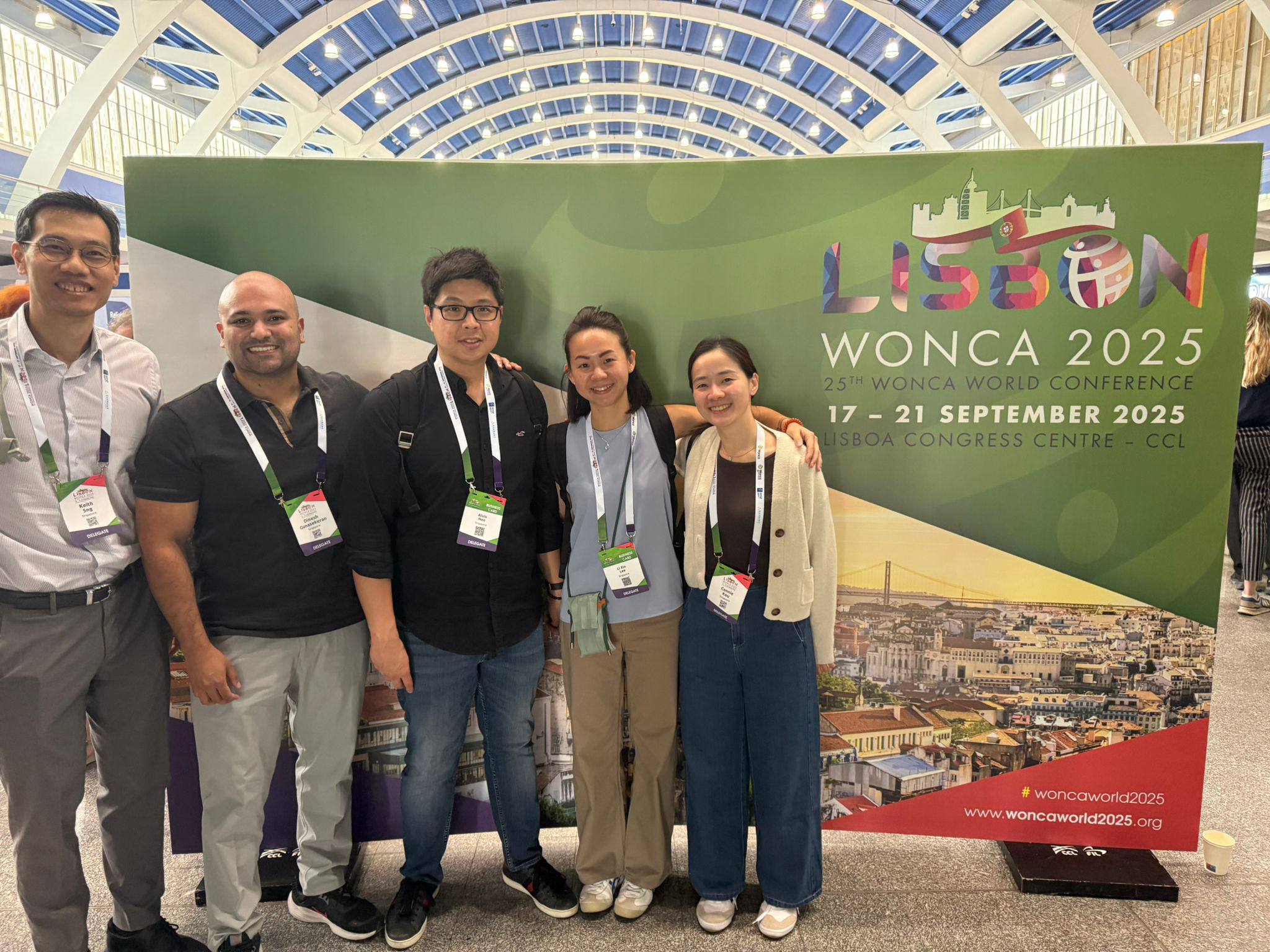
With my MOHT colleagues at the WONCA 2025 conference in Lisbon. (L–R): Keith, Dinesh, Alvin, Li Xin and me.
.png)
At the packed clinical guidelines workshop during WONCA 2025.
The past two years at MOHT have been incredibly rewarding. Leading the GRAECE team through its early, uncertain phase became my greatest opportunity for growth. While I still enjoy solo coding sessions, I’ve discovered how energising it is to collaborate and brainstorm with colleagues. Seeing the potential impact of our work continues to motivate me every day. Attending the WONCA 2025 conference reinforced a powerful insight: healthcare challenges are universal – and the solutions we are building could make a global difference even as we work to improve care right here at home.
When I first joked that I was “the wrong kind of doctor” because I don’t directly save lives, I never imagined how much that would change. Today, I may not hold a stethoscope, but I’m helping to build tools that empower doctors to make better decisions and improve patient outcomes. One day, I hope that my family and friends will see my work in action when they visit their GPs – and know that, in my own way, I am helping to save lives after all.